New book examines equitable degrowth as necessary to combat climate change
“Anthropause: The Beauty of Degrowth” is a new book written by Stan Cox that shows how people can get what they need with less harm to the planet.
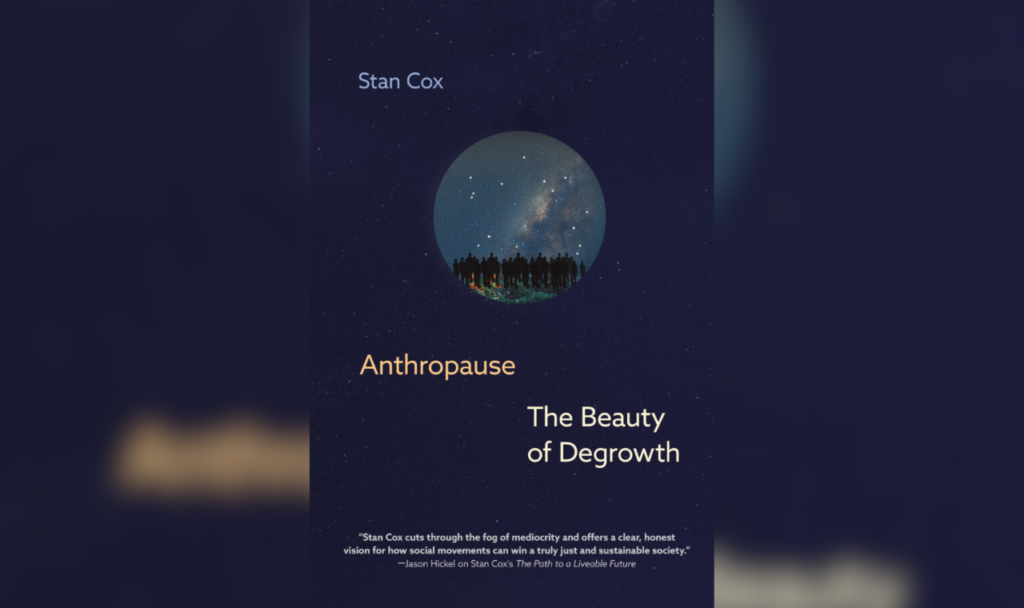
"Anthropause: The Beaty of Degrowth" describes how we can help the planet by rolling back some of the extraction and exploitation we commit to live our daily lives.
How does a global community provide for the needs of its citizens without destroying the planet? That’s the crux of “Anthropause: The Beauty of Degrowth,” a new book out this month.
In the early days of the Covid-19 pandemic, society shut down for a few months. As humans stayed inside, animals returned to their old habitats and pollution eased as industry slowed.

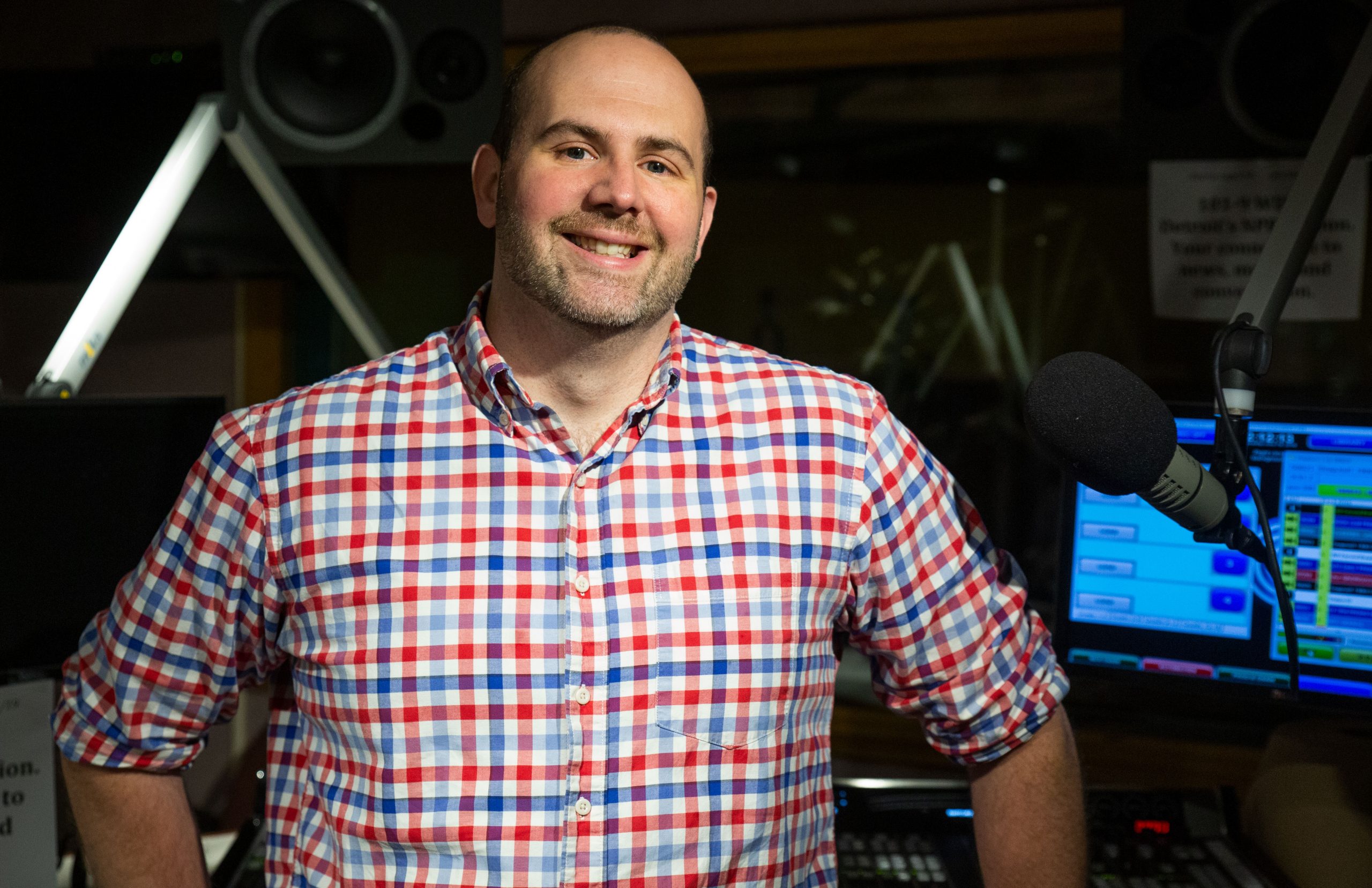
Retired researcher—and new metro Detroit resident—Stan Cox looks at how that “anthropause” could be a preview of the necessary societal changes to save lives and the planet.
He spoke with All Things Considered – Detroit host Russ McNamara last month. Click on the media player to listen or read selected transcripts below.
Russ McNamara, WDET: Why did you write this book?
Stan Cox, Author: The main point I’m making in the book is imagining that we as a society, if we were to rapidly phase out fossil fuels and get by just on the energy that could be generated other ways; and if we stopped plundering the earth for minerals and cutting down forest and causing ecological damage; and we had less energy and materials, and had to allocate them carefully: people know that’s going to mean sacrifice. What am I going to have to give up and so forth?
And what I’m saying in the book is okay, yeah, there are certain things, obviously that will have to be given up. But let’s consider all of the dangers and nuisances, terrible stuff that we put up with an advanced industrial society that has all this energy and materials running through it.
We would be saying goodbye to a lot of those harms and ills by simply not doing a lot of the stuff that requires so much energy input. So the rest of the book, then, is going through specific technologies and activities and so forth that are really harmful to people and the environment, of course, that we would not have the fuel to undertake them, or we would be using resources for meeting people’s basic needs, and we wouldn’t be spending a lot of energy on these other things.
RM: You discuss this and I’m reminded of data centers to run artificial intelligence. People certainly don’t seem to want them and definitely don’t want these in their backyard because there is this concern about the high cost of electricity, and the amount of groundwater that is needed.
SC: That’s absolutely right. One of the big reasons these communities don’t want them is that they create this horrific noise at very high decibel levels and low low frequency noise, which is especially dangerous to human health. When I started writing the book, there wasn’t as much being said about A.I. and the data centers at that time, so I did eventually incorporated them, but the beginning of the second chapter is about noise pollution and and I just used it. It’s seemingly a very small thing, but it really brings out other issues. The leaf blower, especially the gas powered leaf blower, also produces this low frequency and very high volume sound—about eight times the decibel level that the World Health Organization says is safe – and they’re producing a wind about the speed of an EF five tornado. The low frequency sound can travel like three football fields. It’s still above the safe limit.
RM: So what are the societal impacts? Let’s say we start degrowth right now. What are the benefits?
SC: We can’t go on like we’re on the trajectory that we’re on now, because. A degrowth is going to happen. Either a chaotic, brutal degrowth where it’s a Mad Max kind of future, because we’ve tried to force growth to continue and have destroyed ecosystems
Or we can have a planned, rational degrowth that ensures that there’s enough for everybody and that we’re not causing ecological collapse. But there’s no way that growth can continue at this rate.
Sometime in the past three years, we passed a milestone. The quantity of human made stuff—that is everything that human society has manufactured or built or produced—if you weigh all of it up, the mass of all of that exceeds the total mass of all living things on Earth, all plants, animals, microbes, et cetera, and that quantity of stuff being produced is is doubling every 20 years. And clearly that can’t go on.
Herb Stein, an economist from the 70s or 80s was kind of the Yogi Berra of economists. He had a line: “if something can’t go on forever, it won’t” and that’s where growth cannot go on forever. So we have to pull back, create what I called in the book an “anthropause” of our own, and try to have a rational, safe and just reduction in the amount of economic activity for the good of everybody.