The Metro: Why violence can emerge from unacknowledged grief and loss

A targeted shooting at a Grand Blanc church highlights gun access, veteran trauma, and warning signs. Experts discuss how communities can help prevent violence.
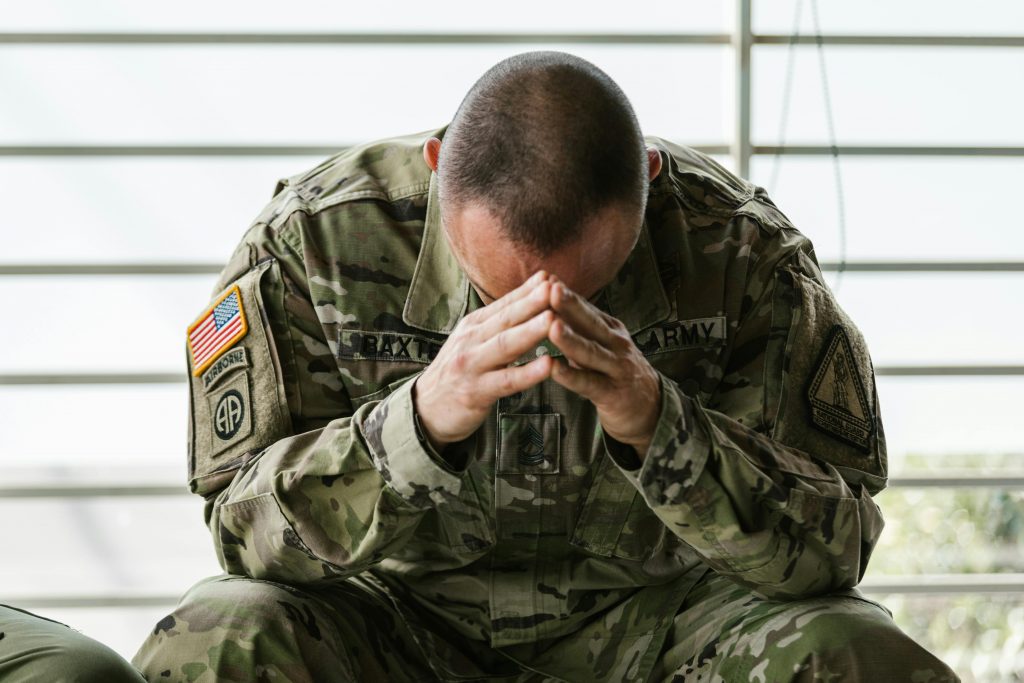
A solder sitting with his hands holding his head

Mass shooting at a Michigan church sparks questions about gun access and warning signs. Photo by RDNE Stock project:


On Sunday, a place of worship was turned into a scene of violence. 

In Grand Blanc, a former Marine and Iraq war veteran shot and killed at least four people at a Mormon church and allegedly set the building on fire. Officials say it was an act of targeted violence, though the motive remains unclear. Some victims are being treated at a local hospital. 

It’s no secret that gun violence is a big part of our culture here in the U.S. Gun deaths have increased over the last decade by 33 percent.

The United States is the rare wealthy nation with more guns than people.

Less than 14 hours before the attack in Michigan, another former Marine, Iraq war veteran and Purple Heart recipient killed three people and wounded five others in North Carolina. 

These stories are about guns and access, but they’re also about veterans reentering civilian life, about isolation, grievance, trauma, and how people respond—or don’t—to warning signs. 

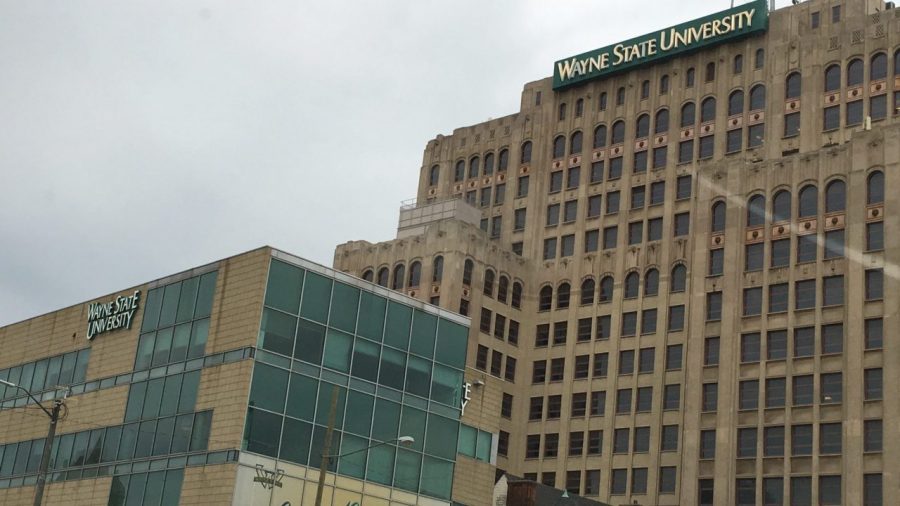
Erin Comartin is a social work professor at Wayne State University. She spoke with Robyn Vincent about the roots of gun violence and how people can try to help prevent the next possible shooting.

Subscribe to The Metro on Apple Podcasts, Spotify, NPR.org or wherever you get your podcasts.

More stories from The Metro

Support local journalism.

WDET strives to cover what’s happening in your community. As a public media institution, we maintain our ability to explore the music and culture of our region through independent support from readers like you. If you value WDET as your source of news, music and conversation, please make a gift today.

Authors

  • Sam Corey is a producer for 101.9 WDET, which includes finding and preparing interesting stories for the daily news, arts and culture program, The Metro. Sam joined WDET after a year and a half at The Union, a small newspaper in California, and stints at a variety of local Michigan outlets, including WUOM and the Metro Times. He is a graduate of the University of Michigan and the University of Chicago.
  • The Metro