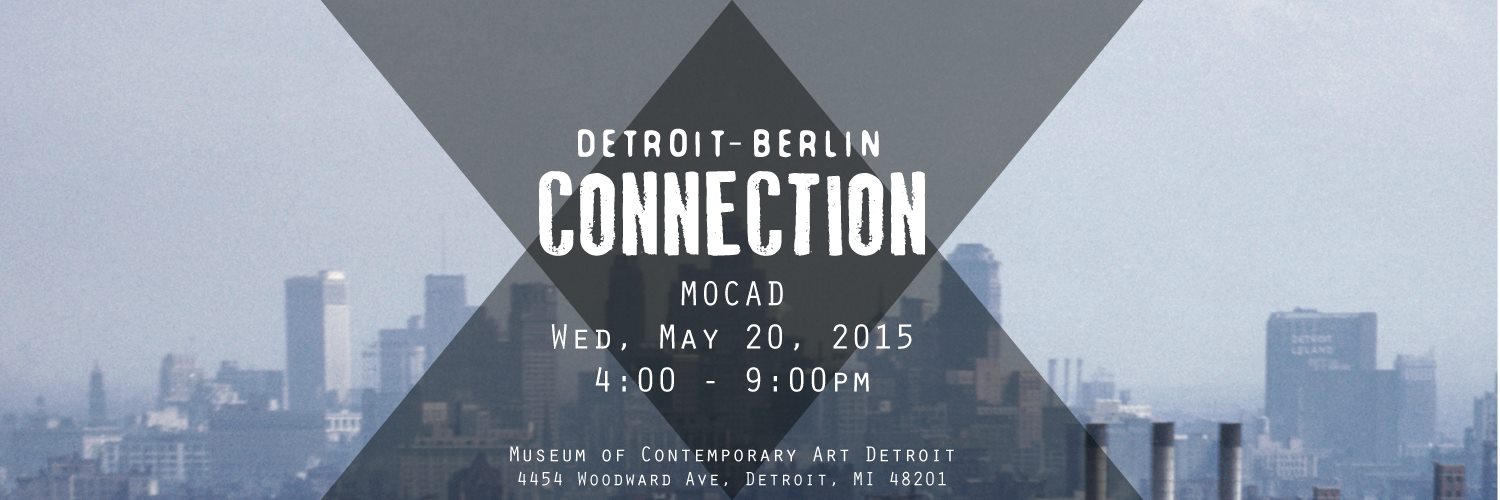


The Detroit-Berlin Connection
by: Martina GuzmanWDET’s Martina Guzmán went to Berlin to explore the connection with Detroit. Watch it online and hear it on the air!
Detroit and Berlin are iconic cities; symbols of cultural and economic domination, as well as of collapse, and (potential) rebirth. Detroit and Berlin have ideological similarities that go far beyond industrial power. As beacons of culture, Detroit and Berlin have both been on the cutting edge of arts activities. Berlin is a crossroads of European film, art, music and food; Detroit is a center of African-American culture, with global credibility in jazz, techno, and emerging cultural expressions.
The Detroit - Berlin Connection looks at the futures of these two great cities and
looks at the measures being used to reinvent industrial cities for the 21st century. Scroll down to find stories, slideshows, videos and more.
The Detroit - Berlin Connection was made possible in part with support from the following:
The German Marshall Fund of the United States - A public policy institution that works to strengthen transatlantic relations. More at gmfus.org.
The Kresge Foundation - Seeking to influence the quality of life for future generations. More at kresge.org.
The Community Foundation for Southeast Michigan - Promoting and facilitating community philanthropy. More at cfsem.org.
With greatest gratitude to:
John Austin
Edith Castillo-Rincon
Margaret Gary
Last week, WDET's Detroit-Berlin Connection series went live with a public event at the U.S. Embassy in Berlin. WDET General Manager Mikel Ellcessor and Martina Guzman, the Detroit-Berlin Connection reporter, join Craig to talk about the series' takeaways and how the series was received in Berlin.
Bruce Katz of the Brookings Institute and Wayne State University Urban Planning Professor Robin Boyle join Martina Guzman and Craig Fahle to discuss The Detroit Berlin Connection.
Ludwig Mies van der Rohe applied the principles of the courtyard, and the importance of outdoor space and landscape to the Lemke house in Berlin and to Lafayette Park in Detroit. This video is part of the WDET series, The Detroit - Berlin Connection.
Schöneweide is a struggling neighborhood in Berlin that lost more than 20,000 industrial jobs once East and West Germany reunified in 1989. Click here to watch this video, part of the WDET series, The Detroit - Berlin Connection.
This audio slideshow features cameos of people who are thinking creatively about land use in Detroit and Berlin.
In this segment of our series, The Detroit - Berlin Connection, WDET's Martina Guzmán examines how Detroit, the city with the highest unemployment of any major metropolis in America, and Berlin, one of the poorest capitol cities in Europe, turn to creativity when it comes to abandoned buildings and vacant land.
Detroit's Roland Rocha is a staple in Berlin's techno scene.
Both Detroit and Berlin were cradles of industry, hubs of creative culture and suffered from a loss of an educated population... brain drain. In part two of our series, The Detroit - Berlin Connection, we look at how artists can revitalize neighborhoods, improve the economy and jumpstart the city’s image.
A cameo of some of the Detroit - Berlin artists who have helped revitalize neighborhoods, improve the economy and jumpstart the image of their cities.
Detroit: A metropolitan American city that’s had more than its share of challenges. The enormous city with a brilliant and sordid past is in the process of a radical re-invention. But as it goes through this re-invention, what city can Detroit look to as a guide or an example? A city across the Atlantic offers a look at what it takes to re-create a metropolis.
WDET’s Martina Guzmán went to Berlin to explore the connection with Detroit. Watch it online and hear it on the air!
WDET's Martina Guzmán joins Craig to preview her multi-media series, The Detroit Berlin Connection.