A Hamtramck-based artist residency program has received a $175,000 innovation award for three years.
Entry Points is a program that offers housing and studio space for returning citizens who were formerly incarcerated juvenile lifers. The program began through the work of Hamtramck Free School, an alternative educational organization that facilitates creative writing and art workshops in Michigan prisons, working with juveniles who were sentenced to life without parole.
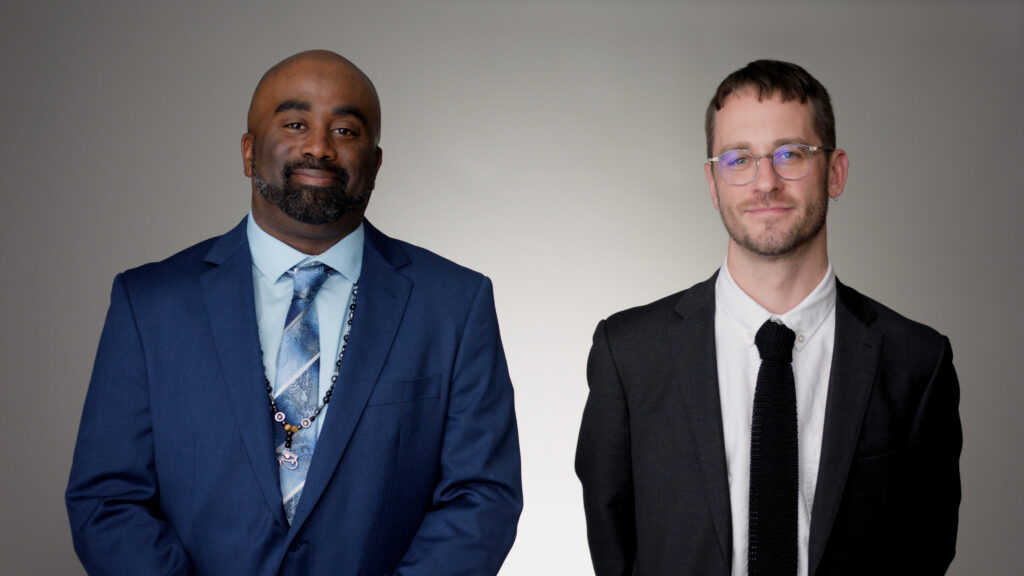
Entry Points Artistic Director Jonathan Rajewski and Transitions Director of Franchise Kyle Daniel-Bey are working together to help returning citizens reintegrate into public life, including presenting their work publicly.
Rajewski says art is a way for people to express themselves.
“We work within the prison system are artists and, you know, art has and continues to be an important conduit of self-expression. It’s a rejection of censorship. It’s an articulation of resistance. It’s an acknowledgement of, you know, the social structures that dictate our livelihoods,” he explains.
Second chances
Daniel-Bey was a juvenile lifer after being incarcerated at 17. He was released from prison due to the Miller v. Alabama 2012 ruling by the U.S. Supreme court.
The ruling says, “No juvenile defendant may face a mandatory sentence of life imprisonment without the possibility of parole, no matter how serious the crime,” according to Justia.
Daniel-Bey says he got a second chance.
“When the Miller ruling came out in 2012, it was finally a door opening because I was never supposed to come home. And art was a way to sustain myself in prison, not only financially, but spiritually and emotionally,” Daniel-Bey shares.
Daniel-Bey says he met Jonathan in 2013 at the Macomb Correctional Facility through a creative writing workshop. He says they became friends.
“I came home in 2018. Since then, we’ve continued our creative exploits through what was created,” he says.
Supporting returning artists
Entry Points gives people an entry point back into society and a chance to make art. The first resident moved in October 2022, when a former juvenile lifer needed a place to live once he was released.
Rajewski says the artists can use the space for studio visits, visits from curators, and exhibition opportunities.
“Our first resident was a writer and almost strictly in the literary realm. And so those relationships tend to be focused more in the literary realm,” he shares.
Daniel-Bey says former juvenile lifers often come home often without resources, family, or support.
“As an adult that goes to prison and spends 20 years and comes back out, they at least have an experiential understanding of having to have paid a bill or navigating as an adult, get a job and all those types of things. We had none of that. And so what we do is we are helping to cushion that landing,” he explains.
Paying it forward
The grant allows at least three artists to use the space over the period of three years, allowing additional staff to be hired. Meanwhile, the program is run by volunteers.
The award is given by the JM Kaplan Fund to 10 awardees for their work in tackling social justice, environmental conservation, and heritage preservation.
Rajewski says he’s grateful for this opportunity to give back.
“This amplifies the work that we’re doing… in the free school, we are largely made up of volunteers. There are no paid employees. There really aren’t any specific kinds of leadership. It’s a sort of shared kind of democratically organized discursive project,” he exclaims.
Daniel-Bey says that besides supporting the resident artists, the funding will support other artists.
“We also do microgrants to other artists. We have other juvenile lifers that have home support and family support, but they may not be have the material support to get their art supplies,” he explains.
Healing power
Daniel-Bey says art is a universal language that can heal people.
“Their art is trying to speak to the soul and the spirit of people and bring them into community, bring them into unity and into a more humanistic understanding of what drives not only the children that do these things, but the society that produced them,” he says.
Rajewski says the funding supports the work they’ve been doing for years.
“When I met Kyle, he was never coming home, and now here we are working outside on this project together. And it is just an endlessly powerful experience to support this work together,” he says.