Such Great Heights: New book looks at ’00s indie rock explosion
In his new book Such Great Heights: The Complete Cultural History of the Indie Rock Explosion, Stereogum managing editor Chris DeVille looks at how changes to TV, the internet, and the record industry fueled the rise in early ’00s indie music.
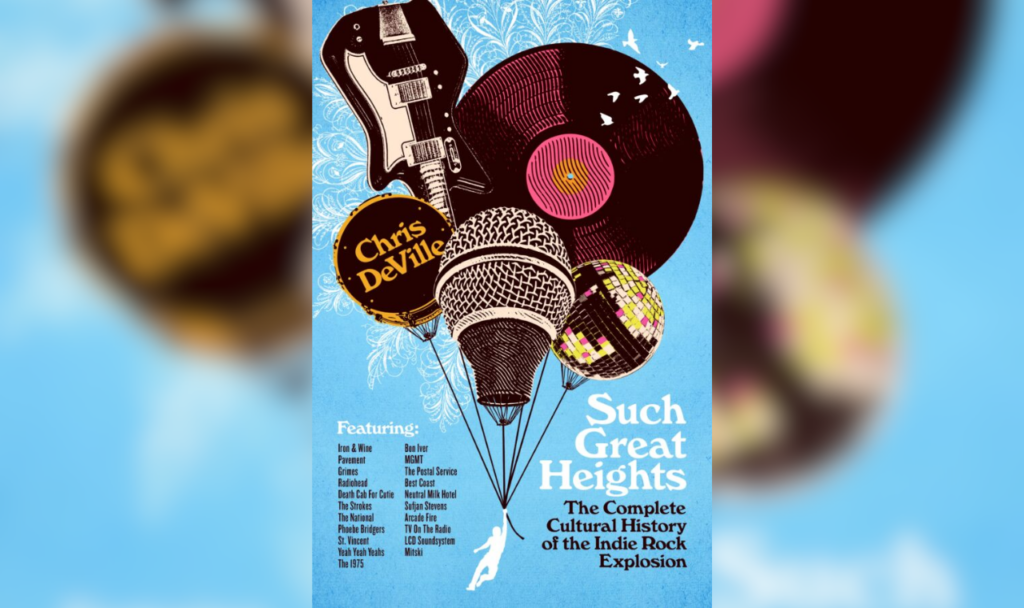
The book Such Great Heights: The Complete Cultural History of the Indie Rock Explosion by Chris DeVille
The music landscape has changed a lot since the turn of the 21st century. Not just styles, but how we consume music. Nothing illustrates that better than the rise of the indie music scene.
In his new book Such Great Heights: The Complete Cultural History of the Indie Rock Explosion, Stereogum managing editor Chris DeVille looks at how changes to TV, the internet, and the record industry fueled the rise in early ’00s indie music.
DeVille talks with WDET’s Russ McNamara. Click on the link to listen or read selected excepts below.
The following interview has been edited for length and clarity.
RM: So why write this book?
DeVille: There’s many different sort of through lines that are being traced here. One of them is technology. It’s a subject that I think is really complex and really fascinating, and it involves a lot of my favorite music ever.
This stuff that has been kind of chronicled and debated online for years in blog posts and social media posts and a lot of the documentation of it is starting to disappear, because websites just go offline, or people delete their social media accounts. And so I wanted to create a little bit more permanent record of some of these things that happened—some of the ways that these bands broke through, some of the conversations that were being had around this music.
One reviewer compared it to like a yearbook that you look back at and you get some fond memories, and you get some cringe, but yeah, it’s kind of like a history of my listening as an adult.
Russ McNamara, WDET: In the book, you mention the TV show ‘The OC’ which was a popular teen soap opera in the early ’00s. How much did that show’s soundtrack play into the rise in indie rock?
Chris DeVille, author of “Such Great Heights”: I was surprised as I was writing the book, how much it became like a shadow history of the evolution of the Internet over the last couple of decades. And you know The OC thing, it’s like they’re putting these bands in front of a much bigger audience. Like Death Cab for Cutie is like a fairly obscure band at the time, and then this character on this popular teen show is like making his whole personality that he loves Death Cab for Cutie.

It’s like giant platform, but then they lose cool points with some people, as you know, sort of a more norm-y audience discovers this band, but it’s definitely, there’s no doubt that it was a huge like funnel, bringing a bunch of bands to a much broader audience
RM: What about the added accessibility of file sharing sites like Limewire and Napster?
CD: Whatever platform you were using to pirate music I think contributed to the accessibility of stuff. Stuff could blow up, even if it didn’t fit into a particular radio format, or it wasn’t getting past the MTV gatekeepers. It didn’t have to fit into any existing niche or existing format to blow up. It could just catch fire and go viral on these file sharing servers.
I mean, the same thing was still true when iTunes came in and kind of formalized and commercialized the process. You could still have a song that people would download it like crazy.
RM: Which indie bands benefitted the most from this setup in the early 00’s?
CD: Arcade Fire was definitely the biggest. The other dimension that I talk a lot about in the book, is Pitchfork. And just like the power that Pitchfork had to make or break someone’s career. If they gave something a 10.0 people were just going to jump on it and worship it. And if they kind of talked smack about a particular band or completely panned a band, then there were instances where that basically ended someone’s commercial prospects. And so like Arcade Fire were like the perfect storm.
RM: So where is indie rock at now? Is it dead? Does the genre really mean anything anymore?
CD: Over time, indie became like more of a genre, and then the genre itself started to change. But I think what we saw happen in the 2010s is sort of like the indie goes pop thing. It was like a bubble, and it really did pop. We still have these sort of like boutique pop stars like Clairo.
We had artists that came out of the indie world become pop stars of a sort because of stuff like Tiktok. Like Mitski is a good example of that where she’s coming from, from the indie rock infrastructure, and she is making music that jumps across genres a little bit.
There’s a hunger for bands that have a little bit more of an edge to them, that are a little bit less smooth, a little bit willing to be weird or noisy. That’s what you see with a lot of the biggest indie bands today – ones that have gone against that sort of, like Spotify-friendly, passive-listening experience. There’s now a hunger for music that’s a bit more abrasive, something that will jolt people out of their stupor.
Music wants to evolve. It wants to find new audiences. And so the whole idea of like, gatekeeping and having the right audience versus the wrong audience, like, that’s something that factors into the book too.