
Tackling Love, Lust and Social Injustice: Marvin Gaye’s Life and Legacy
Marvin Gaye’s iconic voice helped to define not only the sound of Motown Records but the sound of Detroit.
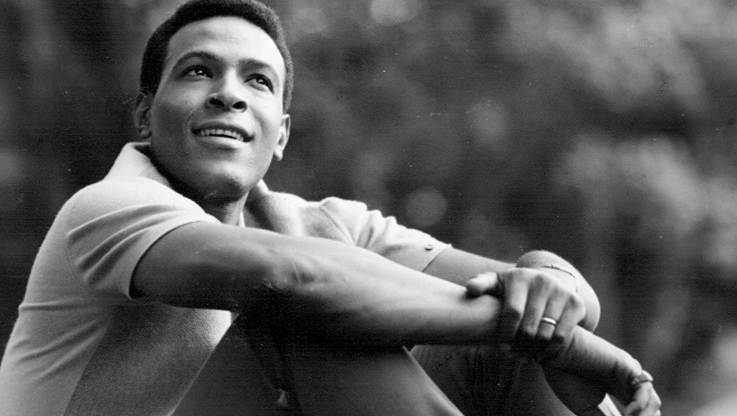
Over the course of his brief life, Marvin Gaye released over 20 studio albums, four live albums, a soundtrack, 20 compilations, and 83 singles. His body of work represented everything from love and lust to social injustice, and his iconic voice helped to define not only the sound of Motown Records but the sound of Detroit.
Click the audio player above to hear more about Marvin Gaye’s life and legacy and read a timeline of his life below.
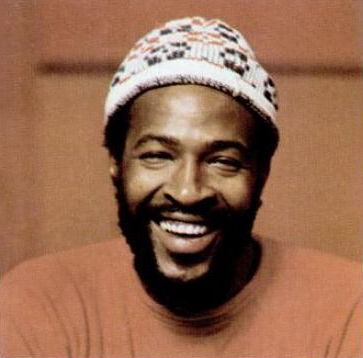
A Singer at the Age of 4
Like many soul singers, Gaye got his start in the church when he started singing at the age of 4. His first professional performing experience was singing tenor with Harvey and the New Moonglows in 1959. It was with that group that he performed his first lead singer performance on “Mama Loocie.”
When the New Moonglows disbanded in 1960, Gaye ended up in the Motor City where Berry Gordy took an interest in the young singer.
Gaye signed to Tamla, a subsidiary of Motown Records, with the hopes of becoming a jazz singer. He released his first Motown recording, “Let your Conscience Be Your Guide,” in 1961, but spent most of the year working as a session musician for other notable Motown artists. He played drums on Stevie Wonder’s “Fingertips Pt II”, on “Please Mr. Postman” by the Marvelettes, the first Motown record to hit #1 on the Billboard charts, and he co-wrote and played on Martha and the Vandella’s iconic song “Dancing in the Streets.”
An International Success
By 1962, Marvin Gaye found his soulful voice and over the course of the next few years, released multiple hit records.
“Can I Get A Witness” became his first international success, which the Rolling Stones would cover a year later on their own debut album. He then found success in “How Sweet It Is To Be Loved By You,” followed by “I’ll Be Doggone” and “Ain’t That Peculiar” which both sold over a million copies.
“It was a challenge and something groovy to do. Besides, she was very pretty.” – Marvin Gaye
He went on to work with Tammy Terrell on a series of duets. An incredible vocalist in her own right, the two performers made a dynamic pair, and had a string of hits together including “Ain’t No Mountain High Enough”, “Ain’t Nothing Like the Real Thing”, “You’re All I Need to Get By” and others.
Gaye was pleasantly surprised by the collaboration, saying, “It was a challenge and something groovy to do. Besides, she was very pretty.” In October 1967, the pair were performing together in Farmville, VA when Tammy Terrell collapsed onstage. She was diagnosed with a brain tumor and died in 1970 at the age of 24. Marvin Gaye delivered her eulogy and his biographers say that he never got over her death.
“I Heard it Through the Grapevine”

Marvin Gaye continued to work as a solo artist and although he had success and sold millions of records, he didn’t have his first number 1 Billboard hit until 1968 with a song that Barry Gordy never wanted to be released: “I Heard It Through The Grapevine”. The song took two months and a number of sessions with the Funk Brothers and members of the DSO to complete.
At the height of his career, Gaye took a brief hiatus to pursue athletic endeavors, going so far as to attend camp with the Detroit Lions. Though he didn’t end up becoming a professional football player, he did befriend Lions’ players Mel Farr and Lem Barney who ended up doing backing vocals on “What’s Going On” which was released in January of 1971. Marvin Gaye produced the track himself, but Berry Gordy was not a fan of the social commentary the song embodied, which broke form the norms of Motown Records.
“I learned that a true artist, when they’re passionate about something, it’s great to let them do it.” – Berry Gordy, Motown
Despite his initial displeasure, even Gordy had to admit that the song was a triumph: “[Marvin] did ‘What’s Going On’ and I thought it was going to ruin his career and he was right. He was right, and it didn’t and it was our biggest record… I learned that a true artist, when they’re passionate about something, it’s great to let them do it.” Marvin reflected on why he wanted to write the single, saying, “I felt a strong urge to write music and to write lyrics that would touch the souls of men and in that way, I felt perhaps I could help.”
The album “What’s Going On” went on to become Marvin’s first million-selling album. After its success, he was resigned to Motown Records for a record $1 million and, in 1973, released the album “Let’s Get It On.”
A Broken Marriage, Financial Trouble
By 1978, Marvin Gaye’s marriage to Anna Gordy was falling apart and he was falling behind on alimony and child support so an agreement was made for half of the proceeds from his next album to go to his ex-wife, hence the album “Here My Dear.” The divorce album didn’t receive positive reviews upon its release but is now considered to be a landmark album.
Although Gaye was enjoying professional success, he was in serious financial trouble and had was battling with drug addiction. It was at that point that he moved to Belgium with his second wife, Janice, and his kids. According to Janice, the reprieve from stardom that Belgium provided was necessary: “The pressure of being Marvin Gaye was too much for him.”
In 1983, Gaye’s “Sexual Healing” tour ended amid drug use and illness, and he moved into his parents’ Los Angeles home.
On April 1, 1984, following an altercation with his parents in which he intervened, his father shot him twice, once in his shoulder and once in his heart, both at point-blank range. Marvin Gaye was pronounced dead less than 30 minutes later, a day before his 45th birthday. The news of his death shocked the world. Smokey Robinson grappled with his death years later, saying, “Eventually you have to accept the fact that this person is gone. They’re gone, and the only thing that you’re going to have now are memories.”
Audio feature by Ann Delisi
Post written by Meta Stange
Support the news you love.
Here at WDET, we strive to make our journalism accessible to everyone. As a non-profit public media institution, we maintain our journalistic integrity through independent support from readers like you. Because you value WDET as your source of news, music, and conversation, please make a gift of support today. Even $5 helps!



.png)
